
The Orange County Housing Market Feels Hot and Soft at the Same Time

Why luxury home prices are still pushing higher while buyers across the broader market are becoming more selective
If you have been trying to make sense of the Orange County housing market this year, you are not alone.
Some homes are still commanding eye-popping prices. In a number of coastal neighborhoods, beautifully updated or highly desirable properties are continuing to set the tone for what buyers are willing to pay. At the same time, many sellers are finding out that not every listing gets the benefit of the doubt. Homes that feel overpriced, less finished, or more work-intensive are facing resistance.
Today’s market feels hot and soft at the same time because the market is becoming more selective. In Costa Mesa especially, the price ceiling is rising faster than the floor.
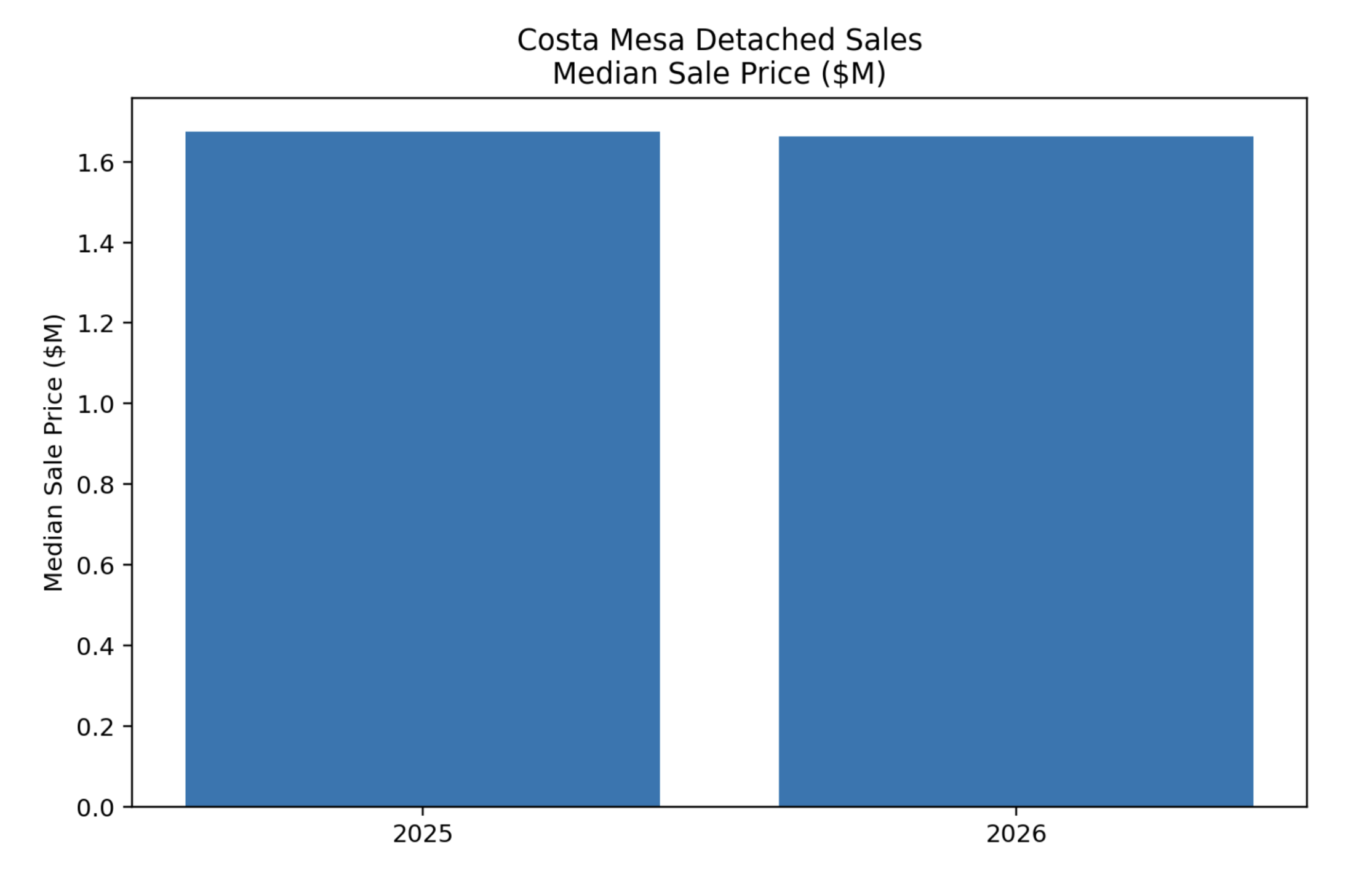
Table 1. Costa Mesa detached single-family market, YTD 2025 vs YTD 2026
At first glance, Costa Mesa looks relatively steady
If you only looked at the median sale price, you might conclude not much has changed. Through July 2025, the median detached single-family sale price in Costa Mesa was $1,675,000. Through July 2026, it was $1,662,500. That is a difference of less than 1 percent.
But median sale price alone is not telling the full story.
Price per square foot in Costa Mesa increased from $942.95 to $1,007.40, up nearly 7 percent. Meanwhile, the number of closed sales declined from 255 to 224, and the share of homes selling at least 5 percent below their original asking price increased from 24.7 percent to 29.5 percent.
That combination matters. It tells us this is not a collapsing market. Buyers are still active. Homes are still moving. But the negotiation environment has shifted, and buyers are acting with more discipline.
The median is hiding the most interesting part of the story. To look beyond the overall median, we divided Costa Mesa sales into four equal price quartiles and compared how prices, marketing time, and buyer demand were changing from the lower end through the middle and top of the market.
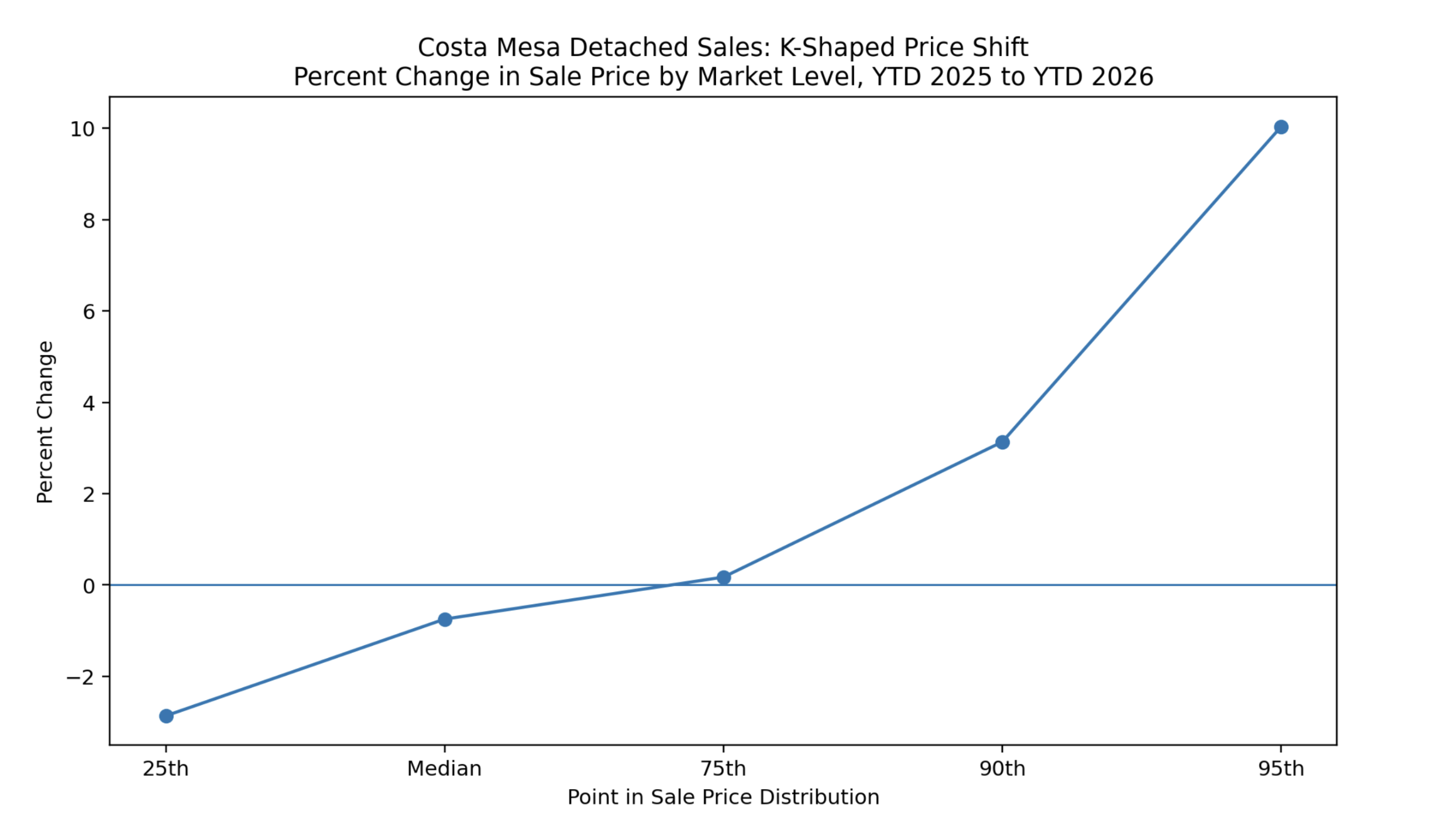
Table 2. Costa Mesa “K-shaped” price shift by market level Buyers are still paying for certainty
In Costa Mesa, the lower and middle tiers of the market were softer year over year– meaning home prices actually went down. The 25th percentile sale price declined about 2.9 percent. The median was down about 0.7 percent. The 75th percentile was essentially flat.
But the upper end moved differently. The 90th percentile increased 3.1 percent. The 95th percentile increased 10.0 percent.
That is the split.
The broader market is not surging, and yet the top-end of the market is breaking all-time records, and not just by a little. In other words, the price ceiling is climbing even while much of the rest of the market is moving sideways.
One of the clearest patterns we are seeing, both in the data and in the field, is that buyers are willing to pay a premium for certainty.
Certainty can mean different things, but usually it looks like:
a prime location
a thoughtful floor plan
finished, updated condition
clean presentation
good design choices
fewer near-term projects
fewer unknown costs after closing
To test that idea, we grouped Costa Mesa sales into groups based on the home’s condition. Homes described as renovated, remodeled, turnkey, or move-in ready were compared against homes described as fixer, original, or needing work, as well as a middle “other” category.
In 2025, renovated or turnkey homes sold for a median of $970.04 per square foot. In 2026, that figure increased to $1,072.12 per square foot. By contrast, homes described as fixer or original sold for $893.49 per square foot in 2025 and $874.12 in 2026.
That widening spread suggests buyers are becoming more intentional about what they are willing to pay up for. They will still buy a home that needs work, but they increasingly want that pricing to reflect the work, the risk, and the additional cash required.
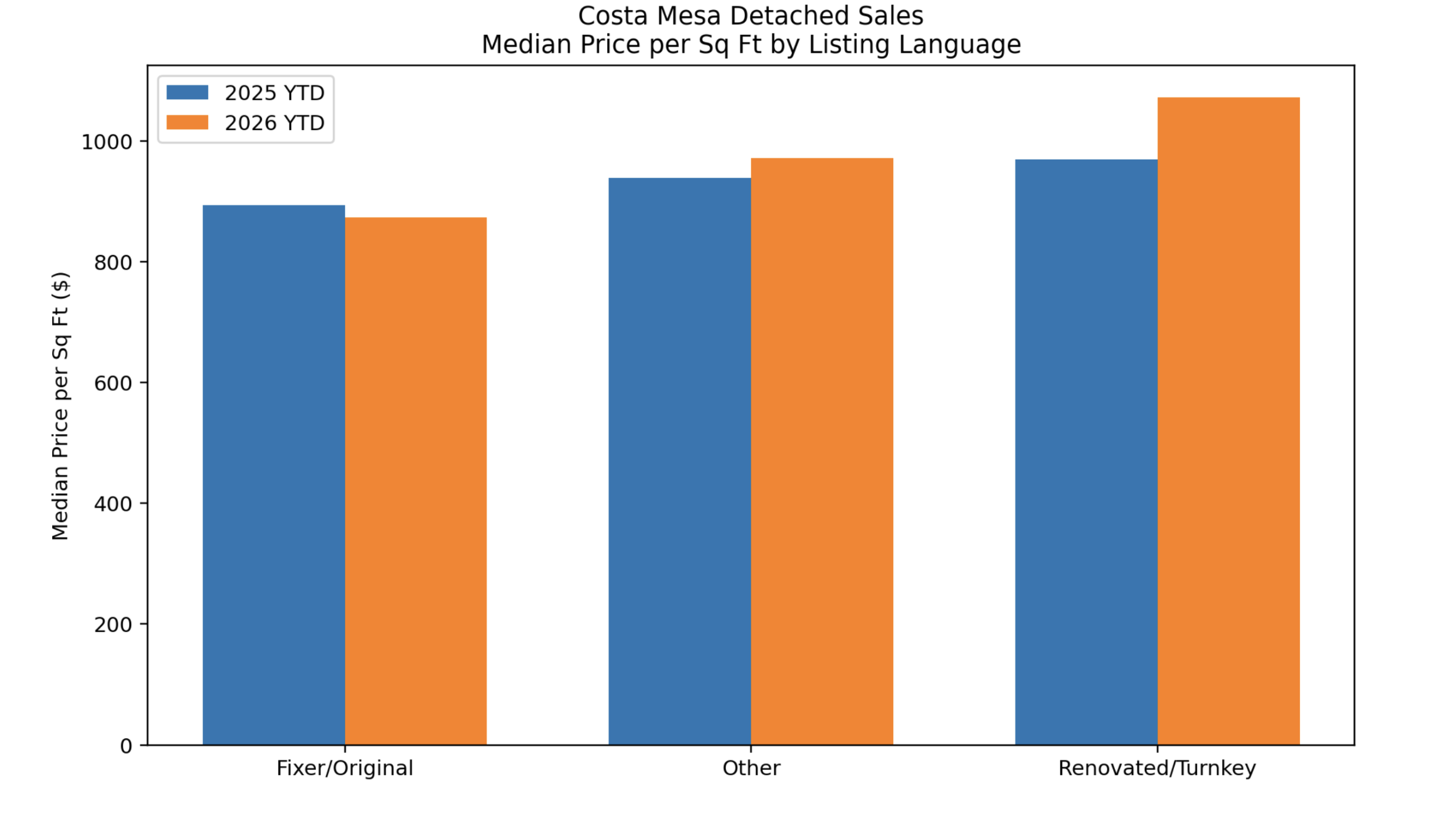
Table 3. Costa Mesa Home Condition Comparison
An important nuance here is that turnkey homes are not immune from negotiation. In fact, many polished homes are still seeing buyers push back if the pricing feels aspirational. So the lesson is not simply “remodel and win.” The lesson is that buyers are paying a premium for a finished product, but they are still paying attention to value.
Mesa Verde and Eastside are telling slightly different stories
Because I work so much in Costa Mesa, I wanted to look more closely at two neighborhoods I talk about often: Mesa Verde and Eastside Costa Mesa.
Mesa Verde has been impressively steady. The median detached sale price increased from $1,892,500 to $1,950,000, while median price per square foot climbed from $869.99 to $962.06. Even more notably, median cumulative days on market dropped from 15 days to just 8.
That is a very healthy neighborhood-level performance. It suggests that Mesa Verde continues to attract buyers who understand the neighborhood’s value, and it also reinforces the idea that quality updates are being rewarded.
Eastside Costa Mesa is telling a different, but equally interesting, story. Median sale price increased from $2,085,000 to $2,280,000, and median price per square foot also increased, from $1,182.34 to $1,233.30. At the same time, median cumulative days on market increased from 11 days to 17.
That matters because it shows that higher prices do not necessarily mean an easier selling environment. Eastside is reaching higher price points, but buyers are not indiscriminately paying whatever a seller asks. Record pricing and increasing selectivity are happening at the same time.
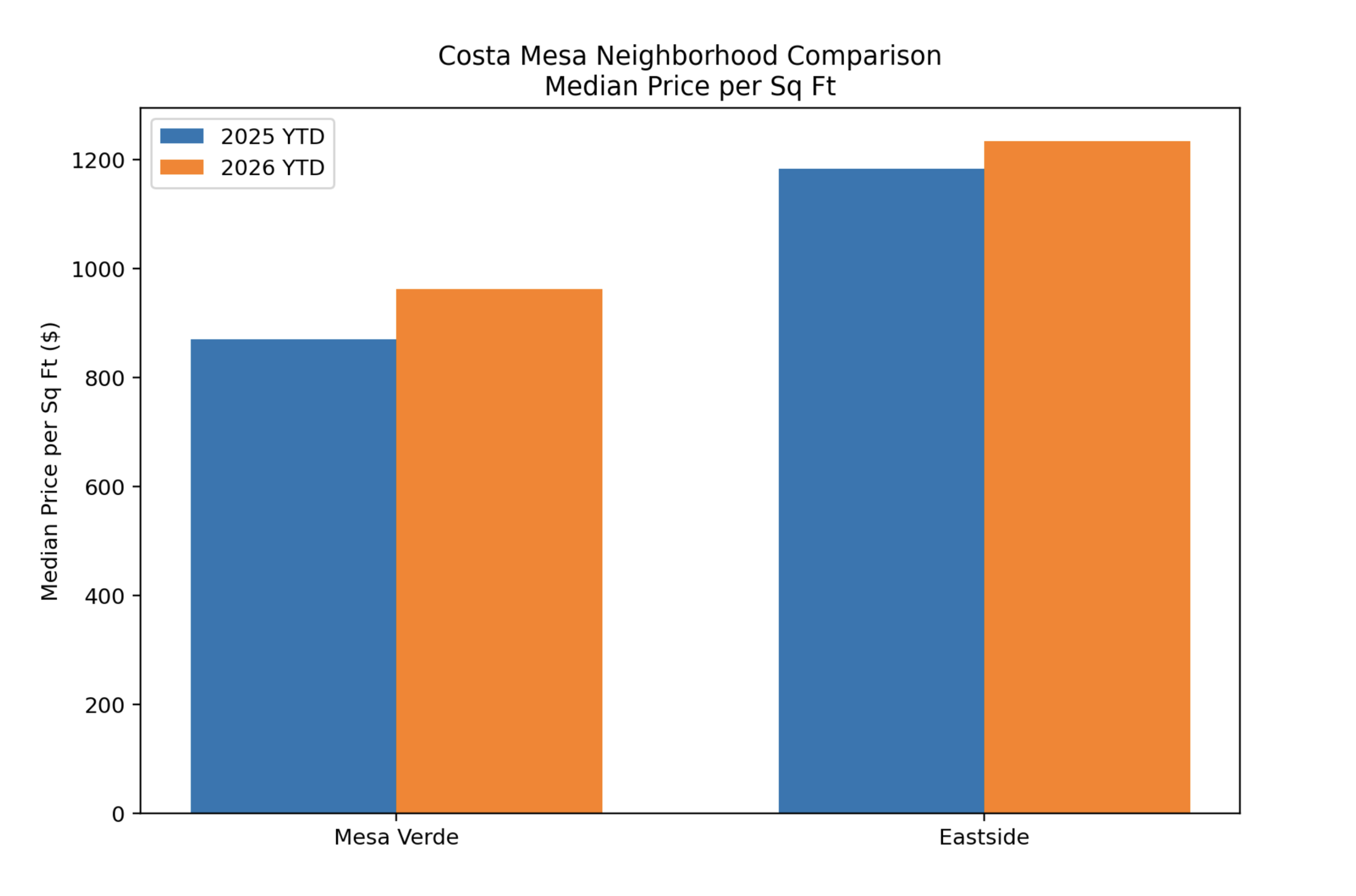
Table 4. Mesa Verde vs Eastside Costa Mesa, YTD 2025 vs YTD 2026
Costa Mesa is holding up better than some neighboring markets
To put Costa Mesa in context, we compared detached single-family sales in Costa Mesa, Newport Beach, and Irvine.
Costa Mesa’s median sale price was essentially flat year over year. Newport Beach’s median declined from $5.0 million to $4.65 million. Irvine’s median declined from about $2.39 million to $2.22 million.
That does not mean Costa Mesa is “hot” and everywhere else is “cold.” It simply reinforces the point that there is not one Orange County housing market. Different submarkets are behaving differently, and broad county-wide statements miss a lot of important nuance.
What feels especially relevant in the current moment is that coastal markets can still produce very strong top-end outcomes even while the middle and lower portions of the market become more price-sensitive.
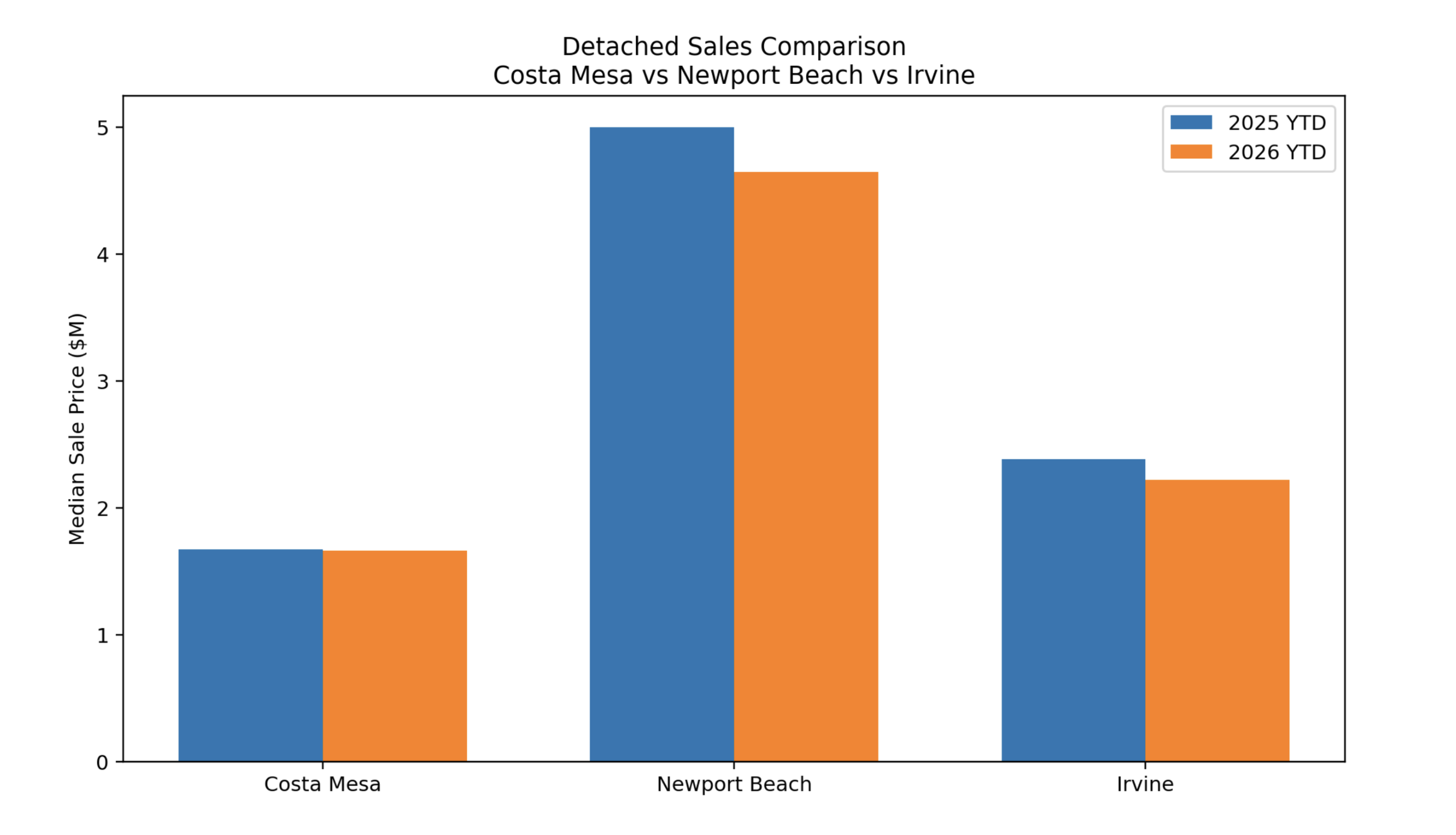
Table 5. Detached single-family median sale price comparison
A quick note on rentals
Rental trends are becoming increasingly relevant for homeowners and investors trying to decide whether to lease, hold, or sell.
The Costa Mesa rental data shows average single-family rent at $4,896 in June, with 23 days on market, 63 active listings, and a 3.58 percent vacancy rate.
That suggests the rental market may be stabilizing rather than continuing its prior surge. I would describe that as a modest softening or plateau, not a dramatic downturn.
That matters because investors and owners can no longer assume that every rental will lease instantly at a premium. Underwriting and pricing discipline matter more when both resale buyers and tenants are becoming a bit more selective.
What this means for the second half of 2026
For sellers, the takeaway is not that the market is bad. It is that the market is less forgiving. Homes with strong presentation, thoughtful pricing, and a compelling value proposition are still selling. But sellers should not assume that because one beautiful home down the street set a record, the market will validate any price.
For buyers, there may be more leverage than the headlines suggest, particularly on homes that need work or that came to market aspirationally. At the same time, the best homes are still able to create competition and command meaningful premiums.
For owners and investors, this is a market where certainty is being rewarded. Location, design, quality updates, and move-in readiness are commanding real premiums. Homes that require more effort, more cash, or more imagination are still selling, but the buyer pool is narrower and more price-sensitive.
The Bottom Line
If I had to sum up the market in one sentence, it would be this:
The Orange County housing market is not broadly weak. It is increasingly selective.
In Costa Mesa, that selectivity is showing up as a split between a flatter lower and middle market and a stronger upper end. It is also showing up in the widening premium buyers are willing to pay for homes that feel finished, easy, and well-positioned.
That does not mean every luxury home will sell for top dollar. It does not mean every fixer is doomed to struggle. It means today’s buyers are more thoughtful about where they stretch and where they push back.
And in a market like this, that distinction matters.
If you’re considering any kind of real estate move for 2026, whether buying, selling or making changes to your rental properties, get in touch.
We’d be honored to discuss you personal real estate goals for 2026 and how Heritage Coast can help you achieve them.
Data notes
This analysis is based on CRMLS Data for detached single-family home sales in Costa Mesa, Newport Beach, and Irvine, comparing January through July 2025 with the same period in 2026. Data for the renovation and fixer analysis and the rental analysis from CRMLS.