
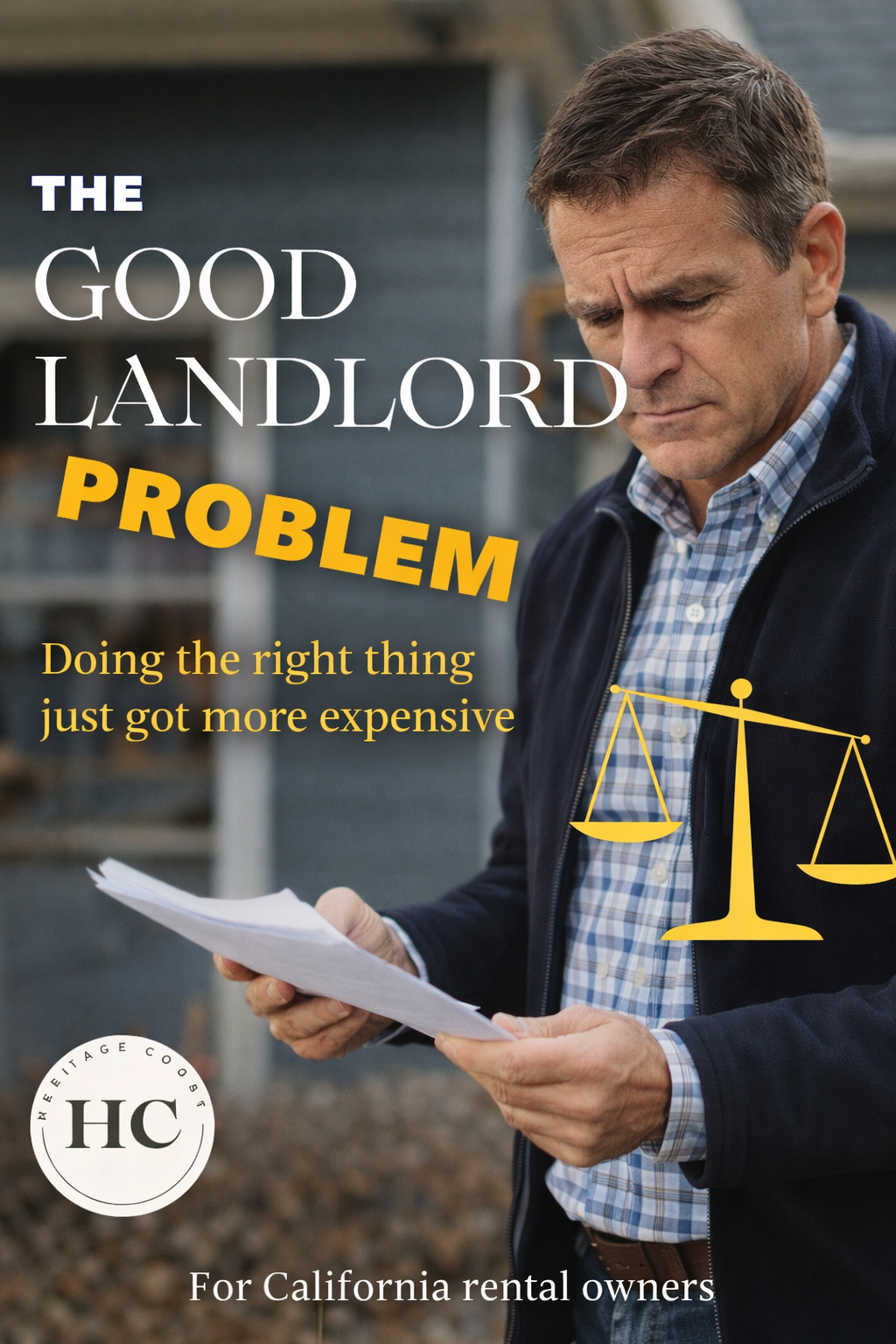
The Good Landlord Problem: Doing the right thing just got more expensive
California changed the rules again, and most landlords won’t realize it until after they’ve lost money.
Meet the nicest landlord in Costa Mesa. He’s a good landlord who wants to keep the property safe and the neighbors happy. He screens tenants carefully and runs background checks. When a tenant’s application comes back with a criminal misdemeanor he denies the application. It feels like common sense.
What this landlord doesn’t know is that California quietly changed the rules.
Under strengthened tenant protection laws, landlords cannot deny housing based on a criminal misdemeanor unless the offense is directly related to housing safety — and even then, only after an individualized assessment.
The applicant files a complaint. Not a lawsuit, just a report. The Landlord is required to revise his screening policies, complete fair housing training, and settle the claim (Most California landlords are shocked to learn a simple screening mistake can cost between $10,000 and $25,000 to resolve).
This is the new risk for California landlords. In 2026, the cost of doing it yourself is often invisible — until it isn’t.
Lease renewals now trigger new obligations:
• updated habitability standards
• updated appliance rules
• updated screening disclosures
• updated required addenda
• penalties for non-compliance
If you own a rental home in California, this is a great time to have a professional on your team — whether you’re raising the rent, renewing a lease, or just want to understand what your property is really worth.
Meet Gretchen, a good landlord.
She owns one rental, a 3 bedroom she’s had forever. She rents it to a good tenant for $2,000 a month (way under market) because she likes stability and the tenant is nice. Everyone’s been happy. Nothing has changed for a long time.
Then she does something that feels harmless. She extends the lease. What she doesn’t realize is that in 2026, a lease extension is no longer just a formality. It’s a legal reset. And the law quietly changed underneath her. Under new California rules, a rental home is no longer considered habitable unless it includes a working refrigerator and stove. The old lease language doesn’t count anymore.
So when she says, “No, I’m not providing a fridge,” she thinks she’s just holding the line on how it’s always been.
The tenant decides to move. And this is where the story stops being about appliances and starts being about money.
Gretchen didn’t explicitly disclose that her property was exempt from local rent control. She never provided the correct addendum at renewal. And because the tenant’s move is now considered a no-fault termination tied to landlord non-compliance, the city steps in. The landlord must pay relocation assistance equal to one month of fair market rent.
Not the $2,000 she was charging. The $4,250 the city says the home is worth.
One missed addendum. One misunderstood rule. An unexpected expense Gretchen never saw coming.
This is the part most landlords don’t understand about California housing law: losses often come from paperwork gaps rather than dramatic occurrences.
If you own a rental home in California, this is a great time to have a professional on your team — whether you’re raising the rent, renewing a lease, or just want to understand what your property is really worth.
At Heritage Coast, we specialize in helping busy and out-of-area landlords maximize both rental income and long-term value, with clear guidance, clean paperwork, and smart strategy. Sometimes that means adjusting rent. Sometimes it means tightening a lease. Sometimes it means selling at exactly the right moment.
If you own an investment property and want to make sure it’s working as hard for you as you worked to buy it, we’d love to help.